Now Reading: Behringer DeepMind 12D – Feature Overview, Operation, Pros & Cons
-
01
Behringer DeepMind 12D – Feature Overview, Operation, Pros & Cons
Here’s an English article about the Behringer DeepMind 12D — its features, how it’s used, and its strengths and weaknesses:
Behringer DeepMind 12D – Feature Overview, Operation, Pros & Cons
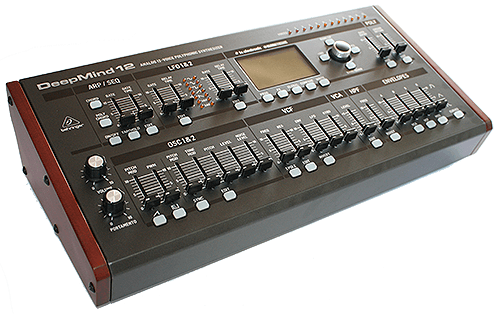
The DeepMind 12D is the desktop module version of Behringer’s acclaimed DeepMind synthesizer line — a powerful 12-voice analog polyphonic synthesizer in a compact, rack- or desktop-friendly form. It condenses the sound generation and modulation power of the original DeepMind 12 keyboard synth into a module that integrates easily with studio rigs or live setups.
Key Features
Analog Sound Engine
- 12 true analog voices with two oscillators per voice give the DeepMind 12D rich, warm polyphonic tones.
- Oscillator 1 typically offers sawtooth and pulse waveforms with pulse-width modulation, and Oscillator 2 provides square/pulse waves with a “Tone” parameter for timbral shaping.
Extensive Modulation
- The synth includes an 8-channel modulation matrix with 19 sources and over 130 destinations, allowing deep and complex modulation routing for expressive sound design.
- Each voice has three ADSR envelopes and two LFOs with multiple waveform options, which can sync to MIDI clock — powerful tools for evolving textures.
Sequencing and Arpeggio
- A 32-step sequencer lets you build rhythmic or melodic patterns. An arpeggiator with tempo sync also broadens performance possibilities.
Effects Engines
- Four world-class TC Electronic / Klark Teknik FX engines are built in — including reverb, chorus, phaser, flanger, delay, and more — so you can shape your sound without external processors.
Connectivity & Control
- The 12D can be controlled via USB, traditional MIDI, and built-in Wi-Fi, letting you tweak parameters from tablets, laptops, or DAWs.
- It also offers balanced audio outputs and pedal inputs for expressive performance.
Operation and Workflow
The DeepMind 12D is designed to be both hands-on and deep:
- Most major synthesis parameters have physical sliders, buttons, and a clear display for editing — meaning you don’t have to dive into menus for every tweak.
- However, like many multi-feature synths, some deeper functions (especially within effects and complex modulation) may require auxiliary editors on a tablet or computer to access them comfortably.
- Built-in Wi-Fi and USB make it easy to control the synth remotely with dedicated software editors if you prefer a visual interface.
Users often describe the workflow as intuitive once you get familiar, with faders and buttons that follow logical signal-path layout, though not everything is instantly accessible at first glance.
Advantages (Pros)
Strong Feature Set for the Price
For its price range, the DeepMind 12D offers exceptionally rich analog sound, powerful modulation, and built-in FX that would be rare even on much more expensive synths.
Flexible Sound Design
The combination of multiple LFOs, envelopes, and a robust modulation matrix gives you the tools to design complex evolving patches — from deep pads and lush analog textures to rhythmic sequences and sharp leads.
Compact and Integratable
As a desktop module, it fits well into studio racks or live rigs, saving space while delivering full synth capabilities comparable to rackmount or keyboard units.
Built-In FX Saves Gear
High-quality onboard effects built in from TC Electronic and Klark Teknik mean you often don’t need external processors to get polished sounds.
Disadvantages (Cons)
Preset Quality and Identity
Some users feel that the factory presets can be underwhelming or overly drenched in effects, meaning you might need to build your own sounds or seek third-party patch libraries.
Oscillator Simplicity
The oscillator section is powerful for analog synthesis, but compared to some modern synths with more waveform variety or digital-hybrid engines, it can feel limited — especially for very experimental timbres.
Menu Depth for Advanced Parameters
While basic controls are immediate, more advanced options — particularly in effects modulation or deep system settings — can require digging through menus or using external editors.
No Multi-Timbral Output
Being mono-timbral, the DeepMind 12D only produces one type of sound at a time — useful for pads and leads but less ideal if you want layered multi-patch performance without external sequencing tools.
Summary
The Behringer DeepMind 12D is a feature-rich, analog polyphonic desktop synthesizer that packs serious synthesis power into a compact form factor. It delivers warm, classic analog tones enhanced with modern modulation, sequencing, modulation matrix routing, and robust built-in effects — all controlled via Wi-Fi, USB, or MIDI. While it may require some learning for advanced features and has a sound identity that leans classic rather than radically experimental, it remains a versatile and compelling choice for studios and live setups alike.