
Now Reading: How to Create a Classic Electric Organ Sound on a Polyphonic Synthesizer
-
01
How to Create a Classic Electric Organ Sound on a Polyphonic Synthesizer
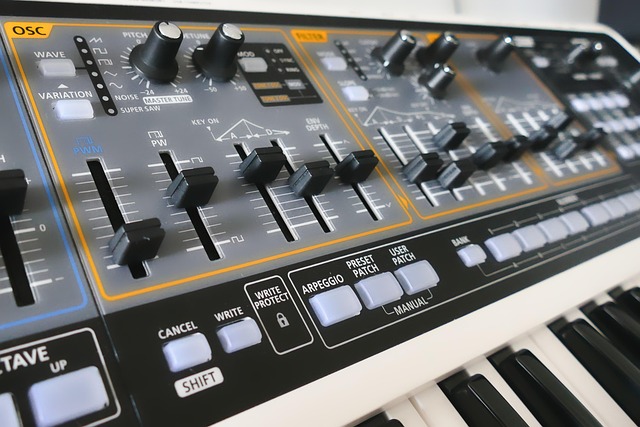
An electric organ sound is fundamentally different from a piano or pad. It is steady, harmonically stacked, and dynamic-neutral—there is no strong attack transient and almost no volume envelope movement. Whether you’re aiming for a jazz organ, funk comping, gospel chords, or classic 80s pop stabs, the core principles remain the same.
This guide shows how to design an organ sound on any polyphonic synthesizer.
1. Understand the Organ Sound (Key Concept)
A traditional electric organ is built from:
- Multiple steady sine or sine-like tones
- Stacked at different harmonic intervals (like drawbars)
- With constant volume while a key is held
There is no filter sweep, no pluck, and minimal dynamics.
Think harmonics + sustain, not envelopes.
2. Oscillator Selection (Drawbar Logic)
Basic Setup
Use multiple oscillators or voices if available.
Recommended waveforms:
- Sine (best, if available)
- Triangle (good substitute)
- Soft square (acceptable)
Typical Harmonic Ratios
- Osc 1: 1.00 (fundamental / 8’)
- Osc 2: 2.00 (octave / 4’)
- Osc 3: 3.00 (fifth / 2⅔’)
- Optional Osc 4: 4.00 (two octaves / 2’)
Balance oscillator levels like drawbars:
- Fundamental = loudest
- Higher harmonics = progressively softer
3. Filter Settings (Almost Static)
- Filter Type: Low-pass
- Cutoff: High (mostly open)
- Resonance: 0–10%
- Key Tracking: On (important)
A real organ does not sweep filters.
If your synth allows it, bypass the filter entirely.
4. Amp Envelope (Critical!)
This is the most important section.
- Attack: 0 (instant)
- Decay: 0
- Sustain: 100%
- Release: Short to medium
Why:
- The sound appears instantly
- It stays constant
- It stops cleanly when the key is released
Avoid slow attacks or decays — that turns it into a pad.
5. Filter Envelope (Usually Off)
- Envelope Amount: 0
- Or use a very subtle envelope if needed for realism
Classic organs do not have filter movement.
6. Velocity Sensitivity (Minimal or Off)
- Velocity → Volume: Off or very low
- Velocity → Filter: Off
Organ volume does not depend on how hard you play.
Expression is traditionally controlled by:
- A volume pedal
- Or manual modulation
7. Add Movement (Essential!)
A dry organ sounds lifeless. Movement is key.
Chorus / Ensemble
- Rate: Slow
- Depth: Medium
- Mix: 30–50%
Optional Vibrato
- Slow LFO → pitch
- Very subtle depth
Rotary / Leslie (If Available)
- Slow speed for chords
- Fast speed for funk stabs
8. Reverb (Tasteful)
- Type: Room or small hall
- Mix: 15–25%
Avoid long, lush reverbs — clarity is important.
9. Playing Style Tips
- Play legato chords
- Use stabs for funk, sustained chords for jazz/gospel
- Avoid arpeggios
- Best range: C2–C6
An organ sound is about rhythm and harmony, not melody.
Quick Variations
Jazz / Soul Organ
- Fewer harmonics
- Less chorus
- Warm reverb
Funk Organ
- Brighter harmonics
- Faster rotary or chorus
- Shorter release
80s Pop Organ
- Strong chorus
- Clean tone
- Slightly brighter filter
House / Deep Organ
- Long release
- Subtle saturation
- Wide stereo chorus
Common Mistakes to Avoid
❌ Too much filter movement
❌ Strong velocity response
❌ Long attack times
❌ Heavy distortion
Final Tip
If you remember only one thing:
An organ is a sustained harmonic instrument, not a dynamic one.
Build it like drawbars, keep envelopes flat, and add movement with modulation — not filtering.
This method works on any polyphonic synthesizer, from analog classics to modern digital and virtual instruments.